In February 2026, partners of the GDF-funded programme Unpaid care, disability and gender-transformative approaches came together in Colombia to review progress, reflect on lessons learned, and explore pathways for the programme’s scalability and sustainability. The field visit and accompanying dialogues with organizations of persons with disabilities (OPDs), women’s organizations, UN agencies and public institutions highlighted how Colombia is translating global commitments into locally rooted solutions that respond to disability, gender and care and support-related inequalities.
Addressing unpaid care and support through a rights-based and gender-transformative lens
Unpaid care work remains one of the most significant yet least visible drivers of inequality. In Colombia, as in many contexts, mothers and other female relatives of persons with disabilities continue to shoulder disproportionate unpaid care work, often at the expense of their education, health and participation in the labour market and public life.
The GDF-supported programme places unpaid care and support at the intersection of disability rights, gender equality and social protection, moving beyond recognition to transformation. In colombia, through joint action led by UNDP, UNICEF, UNFPA and UN Women, the programme has supported:
- the generation of evidence and policy analysis on care and suppot systems,
- the meaningful engagement of OPDs and civil society in shaping care and support-related reforms, and
- the testing of models and tools that promote autonomy, inclusion and redistribution of care and support.
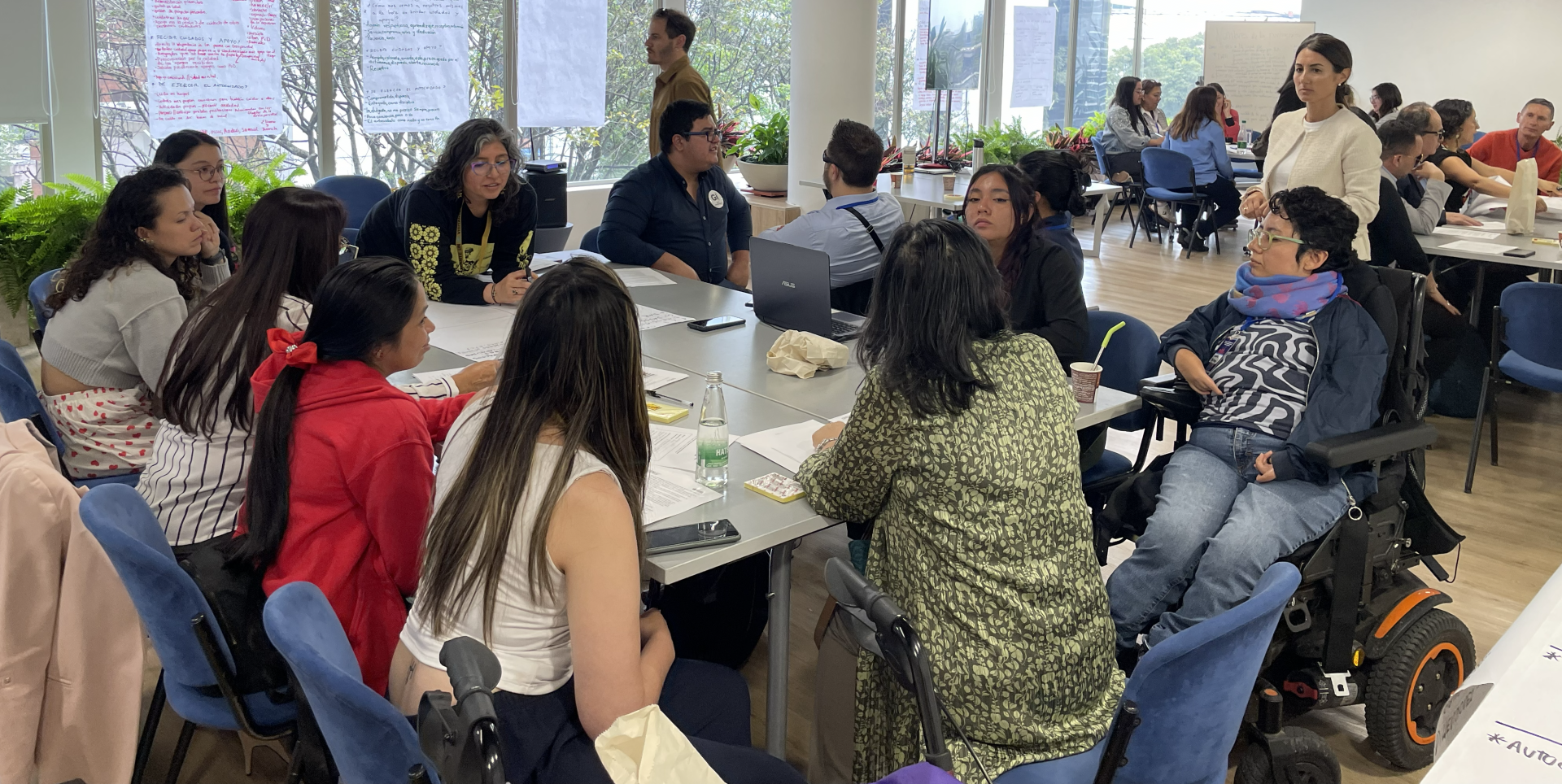
Discussions with civil society during the Bogotá workshop underscored a shared priority: shifting away from approaches that reinforce dependency or medicalized narratives and instead strengthening systems that recognize persons with disabilities as rights-holders, decision-makers and contributors to their communities.
From analysis to practice: strengthening care systems at local level
A key achievement of the programme in Colombia has been its focus on translating analysis into practical tools for system change. This includes work on georeferenced mapping of care and support services, assessments of gender-based violence risks for women and girls with disabilities in care and support contexts, and capacity-building initiatives on care and support systems led by organizations of women with disabilities.
Participants emphasized that these efforts are most impactful when they are embedded in local governance structures and aligned with broader care and support system reforms underway in Colombia. This focus on stregthening institutional capacities rather than on isolated pilots reflects a deliberate shift toward sustainability and scale.
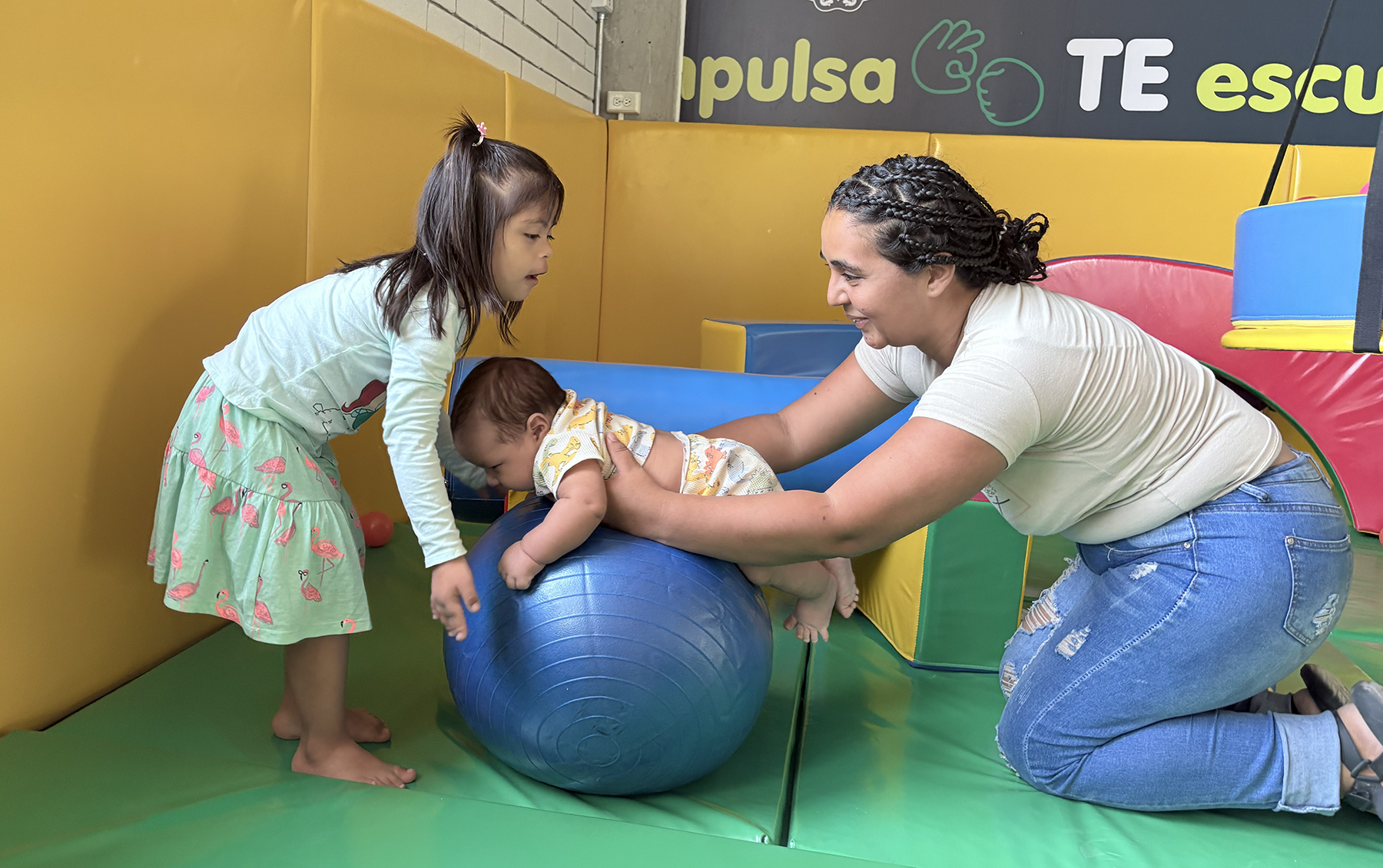
A tangible outcome: an inclusive care and support model for children with disabilities
One of the most concrete results of the programme is the Inclusive Care and Support Systems Model for children with disabilities and their families, developed by UNICEF Colombia. The model promotes coordinated, community-based systems of care and support that link health, education, social protection and family support, while explicitly addressing accessibility and caregiver support.
Crucially, the model:
- recognizes the complementarity between care and support, rather than framing persons with disabilities solely as care recipients;
- promotes services that strengthen autonomy and independent living from early childhood; and
- Reduce care providers time poverty by redistributing care and support responsibilities through the strengthening of early childhood education from an intersectoral, territorial, and rights-based perspective, promoting the removal of barriers that limit access, participation, retention, learning, and advancement of children with disabilities at educational environments.
As a tested and documented approach, the model represents a scalable solution that can inform national policy and inspire replication in other contexts, directly aligning with GDF’s emphasis on turning locally developed practices into evidence for system-wide change.

Alignment with the GDF Strategy 2025–2030
The progress observed in Colombia closely reflects the ambitions of the GDF Strategy 2025–2030, which commits the Fund to moving from pilots to systemic transformation, with OPDs at the center of change.
In particular, the programme advances several of GDF’s strategic priorities:
- Essential services: by strengthening inclusive care systems that connect health, education and social support for children with disabilities and their families.
- Strengthening Support and Protection: by addressing gender-based violence risks in care contexts and embedding disability inclusion in prevention and response pathways.
- OPDs leading the change: through structured participation of disability and women’s organizations in evidence generation, dialogue and accountability.
- Knowledge and learning: by producing tools, models and lessons that contribute to a growing global evidence base on disability-inclusive, gender-transformative care.
Colombia’s experience illustrates how GDF’s four pathways—practice, partnerships, policy and knowledge—can reinforce one another when programmes are locally led, intersectional and grounded in rights.
Looking ahead
The Unpaid care, disability and a gender-transformative approach programme demonstrates that transforming unpaid care and support is key for inclusive development. By investing in locally driven solutions and connecting them to national systems, the programme is helping to reshape how the provision of care and support, disability rights and gender equality are understood and acted upon.
As GDF enters a new strategic period, the lessons and models emerging from Colombia offer practical insights to build inclusive care systems at scale that leave no one behind.