This week, the United Nations Global Disability Fund actively participated in the 19th Session of the Conference of States Parties to the CRPD (COSP19), reflecting on the 20th Anniversary of the Convention on the Rights of Persons with Disabilities (CRPD) and solidifying our commitment to its future implementation.
As we mark this significant milestone, we are also proud to have recently published our Annual Report 2025, a comprehensive overview of our work and impact during the past year and a roadmap for the future.
Reflecting on Two Decades of Progress and Persistent Gaps
The CRPD’s 20th anniversary is a defining moment, acknowledging how far the global community has come in recognizing the rights of persons with disabilities. The Convention profoundly shifted the understanding of disability, moving from a charity or medical model to one where persons with disabilities are recognized as rights-holders entitled to full and equal participation in all aspects of society. This transformative principle, “nothing about us without us,” is no longer contested; the challenge now is to make it a reality.

Despite important progress across many countries, including the adoption of CRPD-aligned laws and policies, and growing prominence for accessibility, the promise remains unequally realized for over a billion persons with disabilities worldwide. Persistent barriers continue to limit access to education, information, cultural life, and decision-making.
Our meta-analysis of 51 national situational analyses highlighted critical systemic bottlenecks, including weak coordination, insufficient financing, data gaps, inaccessible environments, and limited meaningful participation of Organizations of Persons with Disabilities (OPDs).
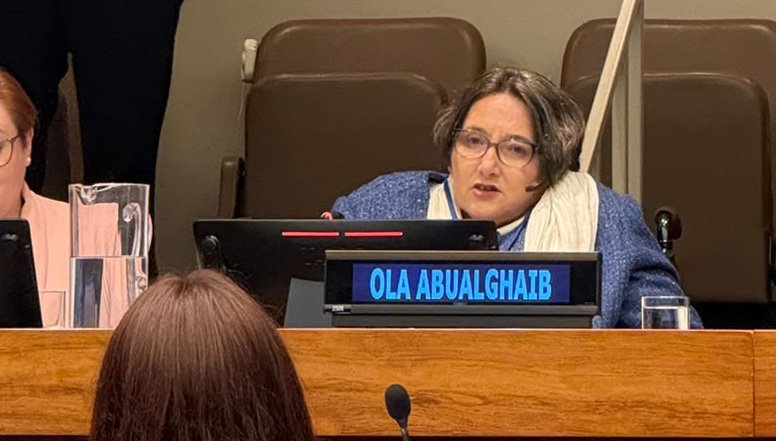
As Dr. Ola Abualghaib, Director of the UN Global Disability Fund, emphasized at COSP19, “Twenty years is not only an anniversary. It is a full generation… For millions of persons with disabilities, [the promise] remains distant. Rights still exist on paper, but are not always financed. Services remain fragmented. Data is still missing. Care and support remain invisible. And participation is too often welcomed in principle but not resourced in practice”.
GDF’s Role: Bridging the Gap from Commitment to Implementation
The GDF has emerged as a vital mechanism to meet this challenge. Since its establishment in 2012, we have supported 116 joint UN programmes in 100 countries, mobilizing over US$120 million and directly reaching over 879 million persons with disabilities. Our value lies in strengthening policies, financing solutions, and supporting partnerships across humanitarian, development, and climate efforts.
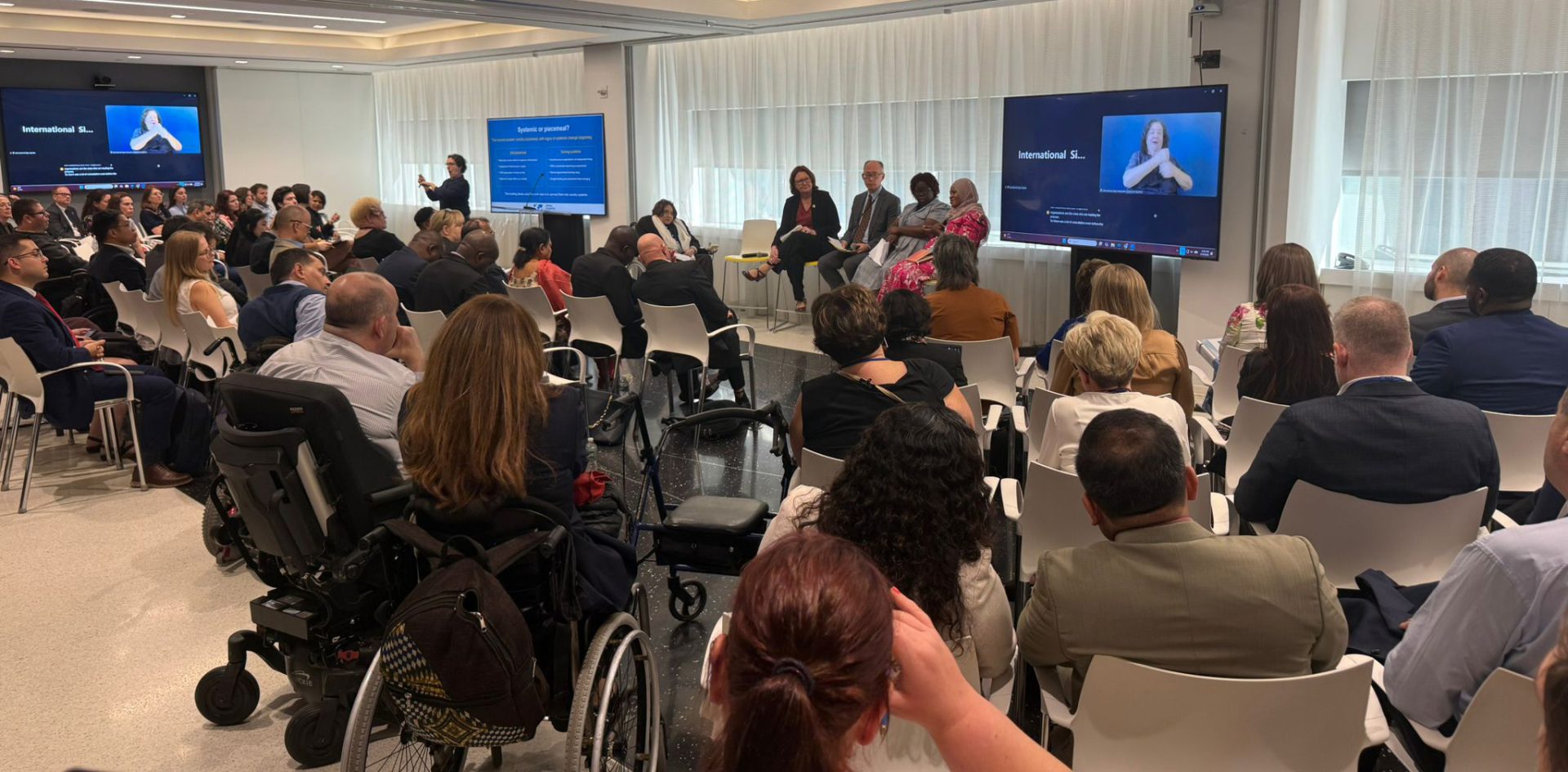
At COSP19, our interventions reinforced how GDF is evolving to deepen its impact:
- Transformative Care and Support Systems: At a reception hosted by the Permanent Mission of Canada, we highlighted our work on transformative care and support systems, emphasizing that these systems, often fragmented and underfunded, must move “from pilots to public systems”. The program focuses on personal assistance, assistive technology, communication support, community-based services, family support, and social protection to enable independent living and inclusion.
- OPD Co-Leadership: A central theme across our COSP19 engagements, including the Australia Side-Event, was the principle of “nothing about us without us ALL.” Our new strategy marks a significant shift: moving from UN delivery to resourcing OPDs as co-leaders with their own funding, mandates, and decision-making power. This approach ensures OPDs are co-architects, not afterthoughts, and brings their lived experiences to the forefront of policy. In 2025, 1,387 OPD members were engaged in programme design, implementation, monitoring, and policy dialogue.
- Strengthening Humanitarian Response: At the Ireland side event, we underscored the heightened risks faced by persons with disabilities in armed conflict and the urgent need for disability-inclusive humanitarian action. Our humanitarian approach is built on three pillars: strengthening inclusive coordination, expanding accessible services across the continuum (relief, response, recovery, reconstruction), and empowering OPDs as co-leaders. We recognize that disability-disaggregated data is a precondition for any response that actually reaches the people most at risk. GDF’s investments in pre-crisis foundations, such as resilient and inclusive cities, are deliberate because “relief without that foundation is always partial and always late”.
The Annual Report 2025: A Testament to Impact and Future Ambition
Our recently published Annual Report 2025 further details this work, showcasing key achievements and outlining our ambitious 2025–2030 strategy. In 2025 alone, GDF programmes impacted 349 million persons with disabilities, strengthened 98 national frameworks, systems, legislations, policies, or strategies, and trained 30,560 representatives on disability inclusion.
Highlights from the report demonstrate our multi-faceted approach:
- Knowledge and Capacity Building: We supported 30,560 stakeholders across 37 countries with increased knowledge and capacities to design and deliver inclusive policies. In 2025, 120 tools, guidelines, and knowledge products were developed, and situational analyses were completed in 10 countries, including a landmark analysis in the State of Palestine which informed inclusive humanitarian and recovery planning.
- Addressing Preconditions for CRPD Implementation: In 2025, our programmes worked to develop, revise, or reform 12 laws, 17 policies, 28 regulations, and 37 system-level changes across 36 countries, addressing critical areas like social protection, health, education, and accessibility.
- Mainstreaming Disability Inclusion: We continue to embed disability inclusion within national and international development frameworks. In 2025, 59% of joint programmes contributed to Common Country Analyses (CCA) and United Nations Sustainable Development Cooperation Frameworks (UNSDCF) processes, and 74% developed inclusive national development planning and monitoring to advance the SDGs.
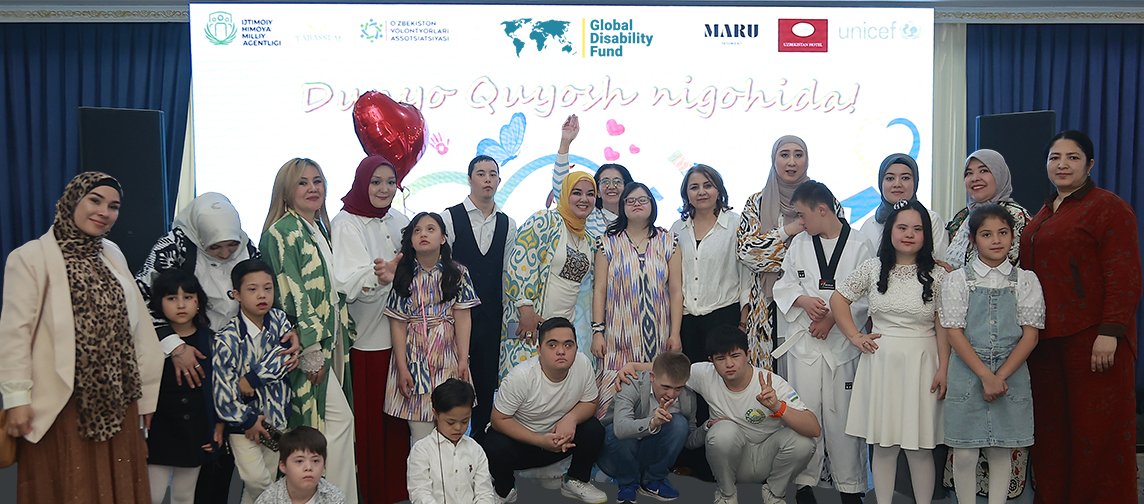
Looking ahead, GDF’s 2025–2030 strategy aims to deepen impact and achieve “systemic transformation”. By 2030, we aim to operate in 100 countries, directly reach 400 million persons with disabilities, and indirectly impact 1 billion people. This strategy is organized around five interconnected goal areas: OPDs leading the change, equitable access to essential services, physical and digital accessibility, support and protection services, and resilience to crises.
As Miyeon Kim, Chairperson of the Independent Committee on the Rights of Persons with Disabilities, notes, “UN GDF represents something historically significant. It is not simply a fund. It is a practical expression of international cooperation under Article 32 of the Convention”.
